

Christians Are Not Called to Be the Judge, Jury, and Enforcer

There is a difference between standing for truth and trying to control everyone around us.
There is a difference between lovingly warning someone and condemning them.
There is a difference between biblical accountability and appointing ourselves the spiritual police.
And somewhere along the way, Christians can lose sight of that difference.
We can become so focused on identifying what everyone else is doing wrong that we forget the much harder command Jesus gave us: love people.
We begin watching.
Evaluating.
Correcting.
Calling out.
Keeping score.
Deciding who is sincere, who is worldly, who is backslidden, who belongs in church, who does not, whose convictions are strong enough, whose clothing is appropriate enough, whose parenting is biblical enough, whose worship is reverent enough, and whose life looks Christian enough.
Before long, we are no longer simply following Christ.
We are attempting to manage everyone else's relationship with Him.
But God never asked us to become the judge, jury, and enforcer of another person's Christian walk.
He called us to love.
He called us to encourage.
He called us to speak truth.
He called us to restore gently.
And He called us to remember that He is God—and we are not.
Jesus Warned Us About Judging Others
One of Jesus' best-known teachings begins with these words:
“Judge not, that ye be not judged.” — Matthew 7:1
Unfortunately, this verse is sometimes misunderstood in both directions.
Some use it to say Christians should never recognize sin or speak about right and wrong.
Others almost ignore it entirely and act as though pointing out everyone else's faults is a spiritual gift.
Neither extreme reflects the whole passage.
Jesus continued:
“For with what judgment ye judge, ye shall be judged: and with what measure ye mete, it shall be measured to you again.” — Matthew 7:2
Then Jesus gives us a vivid picture.
“And why beholdest thou the mote that is in thy brother's eye, but considerest not the beam that is in thine own eye?” — Matthew 7:3
His warning is against hypocritical judgment.
Before I become consumed with the speck in someone else's eye, Jesus tells me to examine the beam in my own.
That alone should change the tone of Christian correction.
We should never approach another believer from a position of superiority.
It is not:
“I have this Christian life figured out, and you clearly don't.”
It should be closer to:
“I need God's grace every single day too. Let us look at what Scripture says together.”
That difference matters.
Discernment Is Biblical. Condemnation Is Not.
The Bible does tell Christians to discern between truth and error.
Jesus Himself said:
“Judge not according to the appearance, but judge righteous judgment.” — John 7:24
So Scripture cannot mean that Christians are forbidden from recognizing right and wrong.
We are supposed to know God's Word.
We are supposed to recognize false teaching.
We are supposed to flee from sin.
We are supposed to encourage one another toward holiness.
But discernment and condemnation are not the same thing.
Discernment asks:
“What does God's Word say?”
Condemnation says:
“I have decided what kind of person you are.”
Discernment can recognize that an action is sinful.
Condemnation assumes authority over someone's heart, motives, spiritual condition, or final standing before God.
And Scripture repeatedly reminds us that God knows things about another person's heart that we simply do not.
There Is Only One Lawgiver and Judge
James gives one of the clearest warnings in Scripture:
“Speak not evil one of another, brethren... There is one lawgiver, who is able to save and to destroy: who art thou that judgest another?” — James 4:11-12
That final question should stop us in our tracks:
Who art thou that judgest another?
Who gave me authority to decide whether another Christian is genuine?
Who appointed me to determine whether someone deserves grace?
Who told me that every believer must share every one of my personal convictions?
Who gave me the ability to know another person's heart?
The answer is simple.
No one.
There is one Lawgiver.
There is one Judge.
And it is not me.
Some Things Are Sin. Other Things Are Convictions.
This is an especially important distinction inside the church.
Christians sometimes turn personal convictions, traditions, cultural expectations, or denominational practices into universal commandments.
The Bible speaks directly to this problem in Romans 14.
Paul describes believers who disagreed about what they ate and which days they considered special.
Instead of telling them to police one another, Paul wrote:
“Who art thou that judgest another man's servant? to his own master he standeth or falleth.” — Romans 14:4
And later:
“But why dost thou judge thy brother? or why dost thou set at nought thy brother?... So then every one of us shall give account of himself to God.” — Romans 14:10,12
Notice what Paul does.
He points each believer back to God.
Every one of us will give an account of himself.
Not of everyone in our church.
Not of everyone on Facebook.
Not of the woman sitting three rows ahead of us.
Not of another Christian family.
Ourselves.
That should keep us very busy.
We Can Turn Christianity Into a List of Man-Made Rules
This is one of the ways judgment becomes especially damaging.
A Christian develops a personal conviction.
That may be wonderful.
Perhaps God has convicted that person about certain entertainment, clothing, food, holidays, music, alcohol, social media, or another area of life.
The problem begins when personal conviction becomes:
“God convicted me about this, therefore every Christian who does differently must be disobedient.”
That does not automatically follow.
Where Scripture gives a clear command, we should stand upon it.
Where Scripture allows liberty, however, we must be extremely careful not to create commandments God did not create.
Jesus confronted religious leaders who elevated human traditions.
“Howbeit in vain do they worship me, teaching for doctrines the commandments of men.” — Mark 7:7
We should take that warning seriously.
Adding rules to Christianity does not make Christianity more holy.
Sometimes it simply makes Christianity more burdensome.
Correction Should Look Like Restoration
Does this mean Christians should never approach another believer about sin?
No.
The Bible teaches exactly the opposite.
But look at the spirit in which it should be done:
“Brethren, if a man be overtaken in a fault, ye which are spiritual, restore such an one in the spirit of meekness; considering thyself, lest thou also be tempted.” — Galatians 6:1
That is remarkably different from the way correction sometimes happens.
Paul says restore.
He says meekness.
He says consider thyself.
Biblical correction is not supposed to be an opportunity to prove that I am right.
The goal is not embarrassment.
The goal is not winning an argument.
The goal is not publicly exposing someone.
The goal is restoration.
Imagine how different churches would feel if every correction began with that question:
“How can I help restore this person?”
Instead of:
“How can I make sure everyone knows this person is wrong?”
Truth Without Love Can Drive People Away
Christians sometimes defend harshness by saying, “I'm just telling the truth.”
But Scripture never gives us permission to use truth as a weapon.
Paul tells us to be:
“Speaking the truth in love...” — Ephesians 4:15
Both matter.
Truth matters.
Love matters.
Without truth, love can become sentimentality that refuses to confront anything harmful.
But without love, truth can become harsh, proud, and destructive.
And when Christians constantly criticize, shame, condemn, and police others, there is a very real consequence.
People begin associating Christianity with condemnation rather than Christ.
Some become afraid to walk through the doors of a church because they expect to be evaluated before anyone bothers to know them.
Others have already walked away because the place that should have introduced them to grace became the place where they felt watched, measured, whispered about, and rejected.
That should grieve us.
Jesus never compromised truth.
But sinners were continually willing to come near Him.
That should make us ask ourselves something important:
Do hurting and struggling people feel like they can come near us?
Jesus Was Full of Grace and Truth
John describes Jesus this way:
“And the Word was made flesh, and dwelt among us... full of grace and truth.” — John 1:14
Not truth without grace.
Not grace without truth.
Grace and truth.
Jesus spoke very plainly about sin.
Yet He also ate with people religious society looked down upon.
He touched people others avoided.
He spoke with people others dismissed.
He offered forgiveness.
He invited sinners to follow Him.
The religious leaders frequently complained about the kinds of people surrounding Jesus.
But Jesus said:
“They that are whole have no need of the physician, but they that are sick: I came not to call the righteous, but sinners to repentance.” — Mark 2:17
A hospital filled only with healthy people would serve very little purpose.
The church should understand that better than anyone.
People should not have to clean themselves up before they are welcome to hear about Jesus.
They come because they need Him.
Just like we do.
We Sometimes Forget How Much Grace We Have Received
Judgment grows easily when we forget our own story.
When we remember how much God has forgiven us, humility should follow.
Paul wrote:
“For all have sinned, and come short of the glory of God.” — Romans 3:23
All.
Not some.
Not the obviously troubled people.
Not merely people outside the church.
All of us.
Every Christian standing in church on Sunday morning is there because of grace.
The pastor needs grace.
The deacons need grace.
The Sunday school teacher needs grace.
The lifelong Christian needs grace.
The brand-new believer needs grace.
And the person whose life is currently a complete mess needs grace.
None of us graduated from needing Jesus.
Christians Are Supposed to Be Known by Love
Jesus gave His disciples a remarkable identifying mark.
He did not say people would recognize His followers because they were the best at exposing everyone else's sins.
He said:
“By this shall all men know that ye are my disciples, if ye have love one to another.” — John 13:35
Love should distinguish Christians.
Not compromise.
Not pretending sin does not exist.
Not abandoning Scripture.
Love.
Biblical love is powerful enough to tell the truth and compassionate enough to walk beside someone afterward.
It does not shout a correction from across the room and then disappear.
It does not expose someone simply to feel righteous.
It does not rejoice when someone falls.
Paul describes love this way:
“Charity suffereth long, and is kind... vaunteth not itself, is not puffed up... rejoiceth not in iniquity, but rejoiceth in the truth; beareth all things, believeth all things, hopeth all things, endureth all things.” — 1 Corinthians 13:4,6-7
Imagine if that described the reputation of every church.
Patient.
Kind.
Humble.
Truthful.
Hopeful.
That kind of Christianity does not weaken the Gospel.
It displays it.
Church Discipline Is Not the Same as Personal Policing
Scripture does provide a place for church accountability and discipline.
Jesus gave instructions in Matthew 18:15-17 for dealing with a brother who sins, beginning privately rather than publicly.
Paul also addressed serious, unrepentant sin within the church in 1 Corinthians 5.
So biblical love does not mean churches have no standards or accountability.
But organized church discipline under biblical leadership is very different from individual Christians constantly monitoring and enforcing their preferences upon one another.
Even biblical discipline has a redemptive purpose.
God's goal is not cruelty.
It is repentance and restoration.
And wherever Scripture provides a process, Christians should be especially cautious about replacing that process with gossip, public humiliation, social-media outrage, or self-appointed spiritual policing.
Encouragement Can Accomplish What Condemnation Never Will
The New Testament repeatedly tells believers to encourage and strengthen each other.
“Wherefore comfort yourselves together, and edify one another, even as also ye do.” — 1 Thessalonians 5:11
To edify means to build up.
That raises another useful question:
After someone spends time with me, do they feel spiritually built up or torn down?
Do my words point people toward Christ?
Do I encourage growth?
Do I offer hope?
Do I pray for people as much as I criticize them?
Do I extend the same patience to someone else's spiritual growth that God has extended to mine?
Spiritual maturity does not happen overnight.
The person we are judging may be in chapter three of a story God is still writing.
We do not know what the Holy Spirit is doing in someone's heart.
We do not know what God has already convicted them about.
We do not know the battles they fought before they ever walked through the church door.
We do not know what they survived.
We do not know how far God has already brought them.
But He does.
Sometimes We Need to Get Out of the Holy Spirit's Way
Jesus promised that the Holy Spirit would convict the world of sin.
“And when he is come, he will reprove the world of sin, and of righteousness, and of judgment.” — John 16:8
That does not mean Christians never speak.
God certainly uses believers to teach, encourage, warn, disciple, and correct one another.
But it does mean the ultimate work of conviction belongs to God.
We cannot nag someone into holiness.
We cannot shame someone into spiritual maturity.
We cannot control someone into loving Jesus.
External pressure may temporarily change behavior.
Only God can change a heart.
Sometimes our responsibility is to speak truth lovingly.
Sometimes our responsibility is to pray.
Sometimes our responsibility is to be quiet and allow the Holy Spirit to work.
Wisdom is knowing the difference.
Before Correcting Someone Else, Ask These Questions
Before confronting another Christian, it may help to examine our own heart.
Is this actually prohibited by Scripture, or is it one of my personal convictions?
Am I trying to restore this person or prove that I am right?
Have I prayed for them?
Have I examined my own heart first?
Am I speaking privately when possible?
Is what I am about to say necessary?
Will my words point them toward Christ?
Am I speaking with humility?
Would I say this the same way if Jesus were physically sitting beside me?
And perhaps most importantly:
Am I doing this because I genuinely love this person?
If love is absent, we may need to deal with our own heart before attempting to correct theirs.
People Need Jesus More Than They Need Our Judgment
The world already contains plenty of condemnation.
People know what rejection feels like.
They know what criticism feels like.
They know what it feels like to be whispered about, excluded, measured, and found wanting.
The church should be different.
The church should be the place where truth is preached boldly and broken people are loved deeply.
Where sinners hear about repentance but also hear about forgiveness.
Where struggling Christians receive accountability but also encouragement.
Where people can admit that they are struggling without immediately becoming gossip.
Where spiritual growth is expected but grace is abundant.
Where we remember that none of us stands before God because we performed Christianity perfectly.
We stand because Jesus saved us.
Our Job Is to Point People to Christ
At the end of the day, we cannot save anyone.
We cannot sanctify anyone.
We cannot see another person's heart.
We cannot take God's seat as Judge.
But we can love people.
We can pray for them.
We can encourage them.
We can teach Scripture faithfully.
We can gently restore someone who stumbles.
We can tell people the truth about sin while also telling them the glorious truth about grace.
We can make our churches places where people are drawn toward Christ instead of driven away by Christians.
And we can remember Paul's warning:
“Let us not therefore judge one another any more: but judge this rather, that no man put a stumblingblock or an occasion to fall in his brother's way.” — Romans 14:13
That may be one of the most important questions we can ask ourselves.
Are we helping people move closer to Jesus?
Or are we becoming the stumbling block standing between them and Him?
We were never appointed judge, jury, and enforcer.
We are servants of Jesus Christ.
And Jesus said the world should recognize His servants by their love.
May we be people who stand firmly on truth, extend extraordinary grace, encourage the struggling, restore the fallen, welcome the searching, and leave the throne of judgment where it belongs—
with God.
A Prayer
Father, help me to see others through Your eyes. Give me wisdom to recognize truth without becoming proud, and courage to speak when You would have me speak. Guard me from hypocrisy, self-righteousness, gossip, and condemnation. Before I examine the faults of others, show me the places in my own heart that need Your correction.
Teach me to speak truth in love. Make me patient with people who are still growing, remembering how patient You have been with me. Help me encourage the discouraged, restore the struggling with meekness, and welcome those who need Your grace.
Never let my words, attitudes, traditions, or personal convictions become a stumbling block that keeps someone from seeing Jesus clearly.
May my life point people toward Christ instead of pushing them away from Him.
In Jesus' name, Amen.
Recommended Books to Further Study the Subject


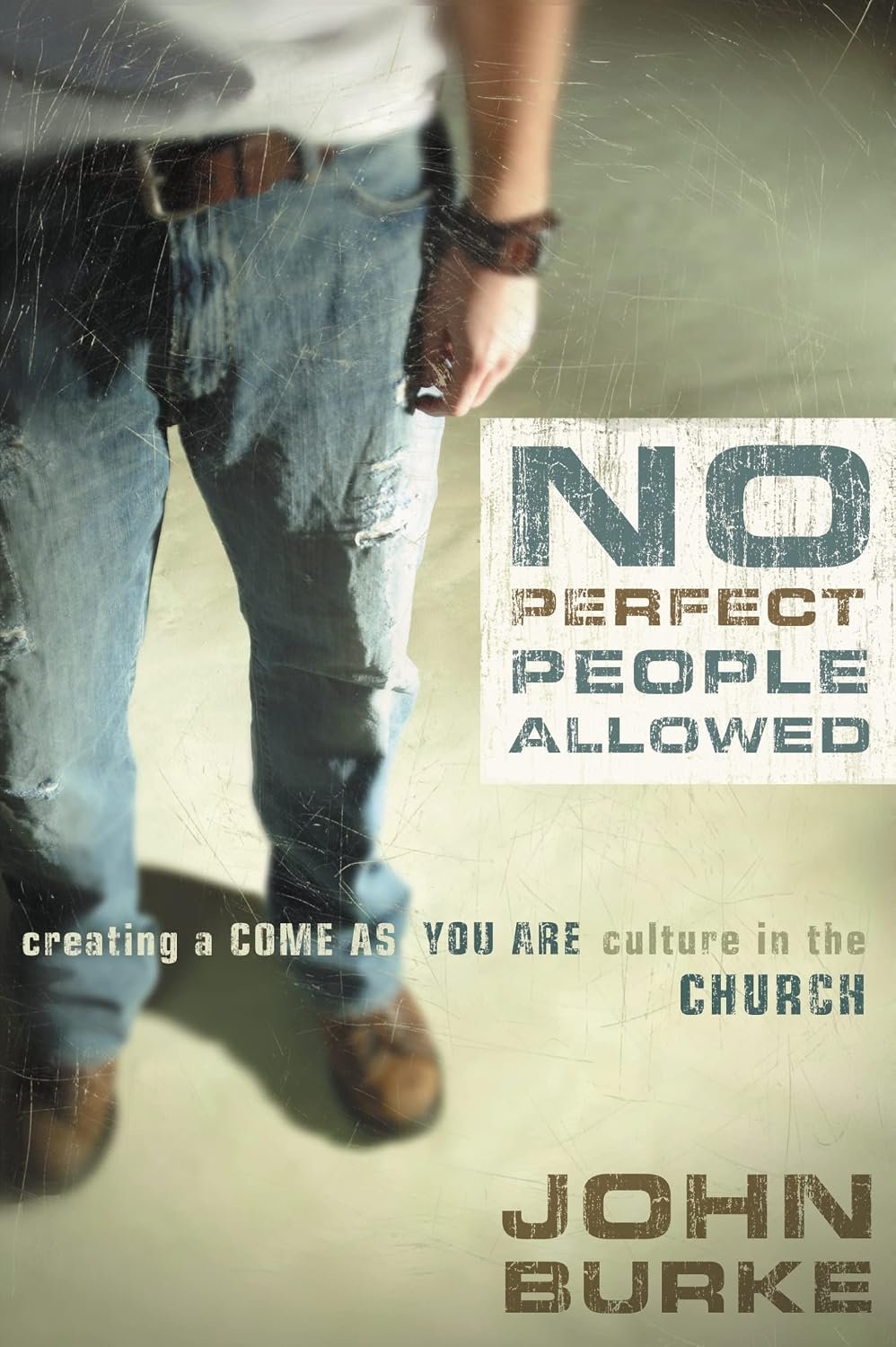

As an Amazon Associate, I earn from qualifying purchases. This page contains affiliate links. If you choose to make a purchase after clicking a link, I may receive a commission at no extra cost to you.