

The Mice That Marred the Land: A Strange Bible Story with a Serious Warning
There are some stories in the Bible that almost everyone knows.
David and Goliath. Noah and the ark. Daniel in the lions’ den. Jonah and the great fish.
And then there are stories that can make me stop while I am reading and think, Wait—did the Bible really just say that?
The story of the Philistines, the Ark of the Covenant, and the golden mice is one of those stories.
Yes. Golden mice.
It sounds strange at first. But tucked inside this unusual account in 1 Samuel is a serious warning about the holiness of God, the foolishness of idolatry, the consequences of rebellion, and the danger of recognizing God’s power without truly surrendering to Him.
The mice may seem like a tiny detail.
They were not.
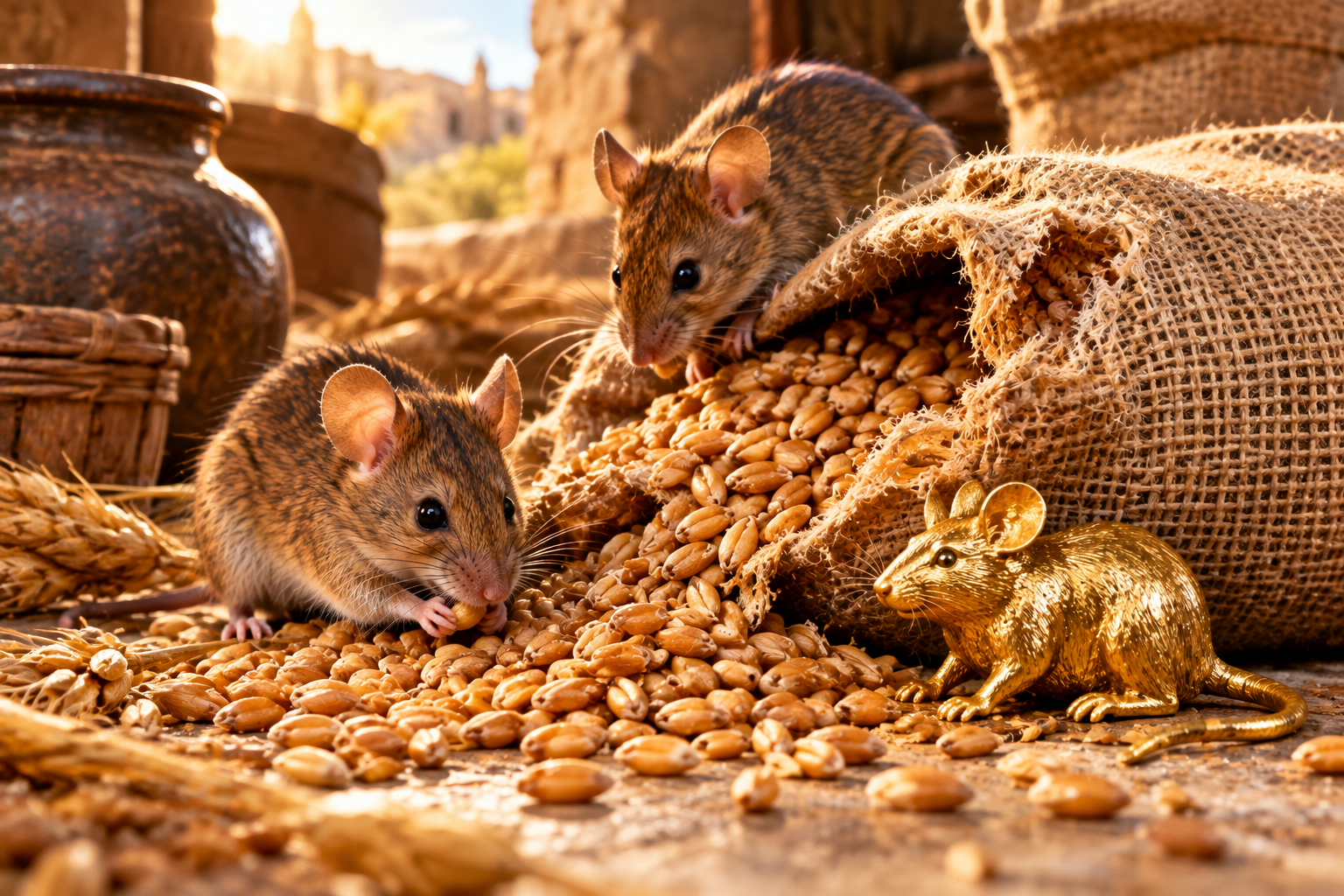
Scripture tells us that these were mice that had “marred the land.”
And sometimes it is the seemingly small things that reveal just how serious a spiritual problem has become.
When Israel Lost the Ark
The story begins before the mice ever appear.
Israel had gone to battle against the Philistines and had been defeated. Instead of stopping to seek God and examine their own spiritual condition, the Israelites decided to bring the Ark of the Covenant into the battle.
Their thinking seems to have been that the presence of the Ark would guarantee victory.
“Let us fetch the ark of the covenant of the LORD out of Shiloh unto us, that, when it cometh among us, it may save us out of the hand of our enemies.”
—1 Samuel 4:3 KJV
Notice their words.
They did not say, “Let us seek the LORD.”
They said, essentially, “Let us bring the Ark so it can save us.”
That distinction matters.
The Ark represented the covenant and presence of God among His people, but the Israelites had begun treating something holy almost like a spiritual good-luck charm.
They wanted God’s power without dealing with their own disobedience.
And God would not be manipulated.
The Israelites were defeated again.
Thousands died.
And the unthinkable happened.
The Philistines captured the Ark of God.
“And the ark of God was taken; and the two sons of Eli, Hophni and Phinehas, were slain.”
—1 Samuel 4:11 KJV
To Israel, it must have seemed devastating.
To the Philistines, it must have seemed like the ultimate victory.
But the Philistines were about to discover something important.
They had captured the Ark.
They had not captured God.
When Dagon Fell Before the LORD
The Philistines carried the Ark into Ashdod and placed it inside the temple of their god Dagon.
I can imagine what they probably believed.
Their god had defeated Israel’s God.
They placed the Ark beside Dagon almost like a trophy.
But the next morning, something remarkable had happened.
“And when they of Ashdod arose early on the morrow, behold, Dagon was fallen upon his face to the earth before the ark of the LORD.”
—1 Samuel 5:3 KJV
Dagon was lying face down before the Ark.
The Philistines picked their idol back up.
That sentence alone says quite a bit about idols.
If I have to pick my god up off the floor, perhaps he is not much of a god.
But the following morning, Dagon had fallen again.
This time his head and hands had been broken off.
“And when they arose early on the morrow morning, behold, Dagon was fallen upon his face to the ground before the ark of the LORD; and the head of Dagon and both the palms of his hands were cut off upon the threshold.”
—1 Samuel 5:4 KJV
God did not need Israel’s army to defend His honor.
He did not need anyone to knock Dagon down.
The false god fell before Him.
What a picture.
Human beings may build idols.
Human beings may exalt false gods.
Human beings may create entire systems of worship around things that cannot see, hear, speak, save, or deliver.
But eventually everything false must fall before the true God.
The New Testament gives us an even greater picture of this truth when speaking of Jesus Christ:
“That at the name of Jesus every knee should bow, of things in heaven, and things in earth, and things under the earth;”
“And that every tongue should confess that Jesus Christ is Lord, to the glory of God the Father.”
—Philippians 2:10–11 KJV
Dagon lying face down before the Ark reminds me that there will never be a rival who stands equal with God.
Then Judgment Came Upon the Philistines
After the humiliation of Dagon came judgment upon the people.
Scripture says:
“But the hand of the LORD was heavy upon them of Ashdod, and he destroyed them, and smote them with emerods, even Ashdod and the coasts thereof.”
—1 Samuel 5:6 KJV
The Philistines quickly realized that something was terribly wrong.
So what did they do?
They moved the Ark.
First from Ashdod to Gath.
Then from Gath to Ekron.
But moving the Ark did not solve the problem.
“And it was so, that, after they had carried it about, the hand of the LORD was against the city with a very great destruction: and he smote the men of the city, both small and great…”
—1 Samuel 5:9 KJV
There is something sobering here.
They kept trying to relocate the problem rather than repent before God.
I wonder how often I can do something similar.
Sometimes I want circumstances to change when what really needs changing is my heart.
I may think:
If I could change jobs.
If I could change churches.
If this person would change.
If this situation would disappear.
If I could just get away from this problem.
And sometimes circumstances genuinely do need to change.
But there are other times when moving the problem from one place to another will not fix anything because the deeper issue is spiritual.
The Philistines moved the Ark.
The judgment followed them.
The Mice That Marred the Land
After seven months, the Philistines had had enough.
They called their priests and diviners and asked what they should do with the Ark.
Their advisers told them not to send it back empty.
They were instructed to send a trespass offering along with it.
And this is where the mice enter the story.
“Then said they, What shall be the trespass offering which we shall return to him? They answered, Five golden emerods, and five golden mice, according to the number of the lords of the Philistines: for one plague was on you all, and on your lords.”
—1 Samuel 6:4 KJV
Then Scripture adds an important detail:
“Wherefore ye shall make images of your emerods, and images of your mice that mar the land; and ye shall give glory unto the God of Israel…”
—1 Samuel 6:5 KJV
The mice had marred the land.
We are not told every detail about what happened, but the wording indicates that the mice were causing widespread destruction.
Imagine what mice could do in an agricultural society dependent upon grain stores, fields, and harvests.
One mouse may seem insignificant.
A devastated harvest does not.
Small creatures multiplied into a serious problem.
And that makes me think about something Scripture teaches repeatedly.
Small things are not always harmless things.
Little Things Can Cause Great Damage
A mouse is small.
So is a spark.
So is a seed.
So is a little compromise.
James describes the tongue by comparing it with a tiny fire capable of enormous destruction:
“Behold, how great a matter a little fire kindleth!”
—James 3:5 KJV
Paul gives a similar warning:
“A little leaven leaveneth the whole lump.”
—Galatians 5:9 KJV
Sometimes I am tempted to divide sin into categories of “serious” and “not that serious.”
A little bitterness.
A little gossip.
A little dishonesty.
A little compromise.
A little envy.
A little pride.
A little resentment.
A little secret habit.
But Scripture continually warns me that what appears small today may not remain small tomorrow.
The mice that marred the land remind me not to ignore destructive things simply because they begin small.
A mouse may be tiny.
Enough mice can ruin a harvest.
A compromise may appear tiny.
Enough compromises can ruin a life.
The Mouse Was Already Associated with Uncleanness
The story in 1 Samuel is not the only place where mice appear in Scripture.
Under the law given to Israel, the mouse was listed among creatures considered unclean.
“These also shall be unclean unto you among the creeping things that creep upon the earth; the weasel, and the mouse…”
—Leviticus 11:29 KJV
Later, Isaiah mentions eating mice in connection with rebellious religious practices.
“They that sanctify themselves, and purify themselves in the gardens behind one tree in the midst, eating swine’s flesh, and the abomination, and the mouse, shall be consumed together, saith the LORD.”
—Isaiah 66:17 KJV
I do not believe the lesson for Christians today is that mice themselves carry some spiritual evil.
Christians are not under Israel’s Old Covenant dietary laws.
Jesus fulfilled the law, and the New Testament makes clear that Old Covenant ceremonial distinctions are not the means by which believers are made righteous before God.
But the biblical imagery is still striking.
Every direct appearance of the mouse in these passages is associated with uncleanness, judgment, devastation, or rebellion.
And in 1 Samuel, the little creatures become part of a much larger lesson:
God is holy.
Recognizing God’s Power Is Not the Same as Knowing God
Something else in this story stands out to me.
The Philistines clearly began recognizing that the God of Israel was responsible for what was happening.
Their priests even told them:
“Wherefore then do ye harden your hearts, as the Egyptians and Pharaoh hardened their hearts?”
—1 Samuel 6:6 KJV
That is an extraordinary statement.
They knew about Egypt.
They knew about Pharaoh.
They knew what Israel's God had done.
And now they knew firsthand that His hand was powerful.
But knowing that God exists is not the same thing as worshiping Him.
Knowing that God is powerful is not the same thing as surrendering to Him.
Being afraid of judgment is not the same thing as repentance.
James reminds us:
“Thou believest that there is one God; thou doest well: the devils also believe, and tremble.”
—James 2:19 KJV
The Philistines came to recognize the power of Israel’s God.
But Scripture does not tell us that the nation abandoned Dagon and turned to the LORD.
Instead, they wanted the judgment to stop.
That challenges me.
Do I only seek God because I want Him to fix something?
Do I want relief more than repentance?
Do I want God to remove consequences while I continue clinging to the very things He is calling me to surrender?
There is a tremendous difference between saying:
“God, please make this problem go away.”
and saying:
“God, change me.”
They Sent Golden Mice—But Gold Could Not Purchase Grace
The Philistines created golden representations of the very things associated with their affliction.
Five golden tumors.
Five golden mice.
They placed them beside the Ark and sent everything toward Israel.
There is something almost tragic about the scene.
They recognized guilt.
They recognized judgment.
They recognized the God of Israel.
They even offered gold.
But throughout Scripture, we eventually learn something much greater.
Sin cannot ultimately be dealt with by gold.
Peter wrote to believers:
“Forasmuch as ye know that ye were not redeemed with corruptible things, as silver and gold…”
“But with the precious blood of Christ, as of a lamb without blemish and without spot:”
—1 Peter 1:18–19 KJV
The Philistines sent gold.
God would eventually send His Son.
What gold could never accomplish, Jesus Christ did at Calvary.
That is where this strange Old Testament story ultimately causes my heart to look forward.
God is holy.
Sin is serious.
Judgment is real.
Human beings cannot purchase their way out of guilt.
We need redemption.
And redemption came through Jesus Christ.
God Does Not Need Me to Defend His Throne
There is another truth I love in this story.
Israel had lost the battle.
The Ark had been captured.
Dagon appeared victorious.
If the story had ended in 1 Samuel 4, everything might have looked hopeless.
But God had not lost anything.
He walked, so to speak, straight into enemy territory and demonstrated His supremacy without Israel lifting a finger.
Dagon fell.
Judgment came.
The Philistines sent the Ark home.
Sometimes I can look at the world around me and become discouraged.
Truth seems mocked.
God seems ignored.
Evil appears powerful.
People exalt things directly contrary to Scripture.
And I can begin feeling as though God is somehow losing ground.
But God has never been in danger of losing His throne.
“But our God is in the heavens: he hath done whatsoever he hath pleased.”
—Psalm 115:3 KJV
Dagon may stand upright for a night.
Morning is coming.
Every false thing eventually falls.
What Are the “Mice” I Have Allowed to Remain?
This is where the story becomes personal for me.
I can read about golden mice, fallen idols, Philistine cities, and ancient battles and keep everything safely thousands of years away.
But Scripture is meant to search my own heart.
So I have to ask myself:
What small things have I been ignoring?
What attitudes have I excused because they seem insignificant?
What compromises have I allowed because I tell myself they are harmless?
Has bitterness begun nibbling away at my joy?
Has fear been eating away at my trust?
Has envy been damaging my contentment?
Has pride been weakening my relationships?
Has distraction been stealing the time I once spent with God?
Has one compromise quietly opened the door for another?
The mice marred the land.
They probably did not destroy everything in one dramatic moment.
That is often how spiritual damage works too.
Little by little.
One bite at a time.
One compromise at a time.
One rationalization at a time.
Until suddenly I look around and wonder how something that once seemed so small became so destructive.
David prayed:
“Search me, O God, and know my heart: try me, and know my thoughts:”
“And see if there be any wicked way in me, and lead me in the way everlasting.”
—Psalm 139:23–24 KJV
That is a prayer worth praying regularly.
Lord, show me the small things before they become large things.
Do Not Harden Your Heart
Perhaps the most important warning in this entire account comes from the Philistines' own religious leaders.
“Wherefore then do ye harden your hearts, as the Egyptians and Pharaoh hardened their hearts?”
—1 Samuel 6:6 KJV
They understood the danger.
Pharaoh had seen sign after sign.
Plague after plague.
Warning after warning.
Yet he continued hardening his heart.
That is dangerous territory.
Hebrews gives us a similar warning:
“To day if ye will hear his voice, harden not your hearts.”
—Hebrews 4:7 KJV
When God convicts me, I do not want to become skilled at explaining away His conviction.
When Scripture exposes something in my life, I do not want to defend it.
When God tells me something needs to go, I do not want to move it from Ashdod to Gath and pretend the problem has been solved.
I want to surrender it.
The Strange Story of the Golden Mice Is Really a Story About a Holy God
At first glance, 1 Samuel 5 and 6 may seem like one of the stranger passages in Scripture.
A captured Ark.
A fallen idol.
A mysterious plague.
Mice destroying the land.
Golden tumors.
Golden mice.
A cart pulled by cows carrying the Ark back toward Israel.
But underneath all of those unusual details is a very clear message.
God is holy.
God will not share His glory with idols.
God cannot be manipulated.
God's warnings should not be ignored.
Small compromises can cause enormous destruction.
Recognizing God's power is not the same as surrendering to Him.
And ultimately, no amount of human effort, religion, silver, or gold can solve the deepest problem between sinful humanity and a holy God.
Only Christ can.
The mice were small.
The lesson is enormous.
So when I come across strange passages like this one, I do not want to rush past them.
Sometimes the most unexpected details in Scripture carry exactly the warning my heart needs.
And perhaps today the question is not really about the mice that marred the Philistines' land.
Perhaps the better question is:
What have I allowed to remain in my own heart that is slowly eating away at the fruitful life God desires for me?
“Keep thy heart with all diligence; for out of it are the issues of life.”
—Proverbs 4:23 KJV
Recommended Books to Further Study the Subject
As an Amazon Associate, I earn from qualifying purchases. This page contains affiliate links. If you choose to make a purchase after clicking a link, I may receive a commission at no extra cost to you.