
Join Our Skool Community- >>> HERE <<< - New 7-Day Study Course Added Weekly
There are seasons when faith feels simple. You read God’s Word, you believe what He said, and your heart rests.
And then there are other seasons.
Seasons when someone says, “If God keeps His promises, why didn’t He…?”
Why didn’t He heal?
Why didn’t He stop the loss?
Why didn’t He answer the prayer?
Why hasn’t Jesus returned yet if He said He was coming soon?
I’ve learned something important: most people don’t ask those questions because they hate God. They ask because they’re hurting. They’re disappointed. They’re trying to make sense of life. And sometimes… we’re the ones quietly wrestling, even if we don’t say it out loud.
So I want to walk through this carefully—because I truly believe this:
God has never broken a promise. Not one.
And if there’s any place we can anchor our trust when emotions surge, it’s here:
“The Lord is not slack concerning His promise…” (2 Peter 3:9)
“Let God be true, and every man a liar.” (Romans 3:4)
“Not one word has failed of all the good promises the Lord your God gave you.” (Joshua 23:14)
But we also need to be honest: people do claim God broke promises. And those claims usually come from misunderstandings about
(1) who the promise was given to,
(2) what the promise actually said, and
(3) what God’s timing looks like.
Let’s go deep.
The Foundation: God’s Promises Flow From His Character
Before I talk about specific promises, I have to start here: God doesn’t keep promises because He’s trying to maintain a reputation.
He keeps promises because He is faithful by nature.
“Know therefore that the Lord your God is God; he is the faithful God, keeping his covenant of love…” (Deuteronomy 7:9)
“If we are faithless, he remains faithful, for he cannot disown himself.” (2 Timothy 2:13)
“Because of the Lord’s great love we are not consumed… great is your faithfulness.” (Lamentations 3:22–23)
When my feelings are loud, I have to remind myself: God’s character is steadier than my circumstances.
A Quick Truth That Clears Up So Much Confusion
Not everything in the Bible is a promise to every person in every situation.
Some statements are:
Direct promises to specific people (like Abraham, David, Israel, or the disciples)
Covenant promises (Old Covenant, New Covenant)
General principles (wisdom sayings—“this is typically how life works,” especially in Proverbs)
Conditional promises (“if you…, then I will…”)
Promises fulfilled in Christ (and applied to believers through Him)
So a lot of “God broke His promise” accusations are really this:
Someone took a verse out of its covenant, context, condition, or timeline—and then judged God by a claim He never made.
Big Categories of God’s Promises (And Proof He Keeps Them)
God’s Promise to Save and Redeem
This is the loudest promise in Scripture: God would send a Savior.
From the earliest pages:
“He will crush your head, and you will strike his heel.” (Genesis 3:15)
To the clearest fulfillment:“For God so loved the world… whoever believes in him shall not perish but have eternal life.” (John 3:16)
“All the promises of God find their Yes in him.” (2 Corinthians 1:20)
God promised redemption, and He delivered—through Jesus.
The cross is not a vague spiritual idea. It is God keeping His word in blood.
God’s Promise to Be With His People
This is one of the most repeated promises in Scripture, and one of the most personally comforting.
“I will never leave you nor forsake you.” (Hebrews 13:5)
“When you pass through the waters, I will be with you…” (Isaiah 43:2)
“Surely I am with you always…” (Matthew 28:20)
Notice something important: this promise is not, “You won’t go through waters.”
It’s, “When you do, I will be with you.”
God doesn’t promise a pain-free life.
He promises a present life—His presence in it.
God’s Promise to Hear Prayer
One of the most misunderstood areas is prayer. Many people assume “God hears” means “God gives me what I asked for on my timeline.”
But Scripture teaches something deeper:
“This is the confidence we have… if we ask anything according to his will, he hears us.” (1 John 5:14)
“Call to me and I will answer you…” (Jeremiah 33:3)
“In the day of my trouble I will call… for you will answer me.” (Psalm 86:7)
God promises to hear.
God promises to respond.
But He never promises to become a vending machine.
Sometimes the answer is yes.
Sometimes no.
Sometimes wait.
Sometimes “I’m going to do something different than you can see right now.”
Paul himself asked for relief and didn’t get the outcome he requested:
“Three times I pleaded… But he said to me, ‘My grace is sufficient for you…’” (2 Corinthians 12:8–9)
God didn’t break a promise to Paul.
God fulfilled a deeper promise: grace, presence, sustaining strength.
God’s Promise of Justice
People look around and say, “If God is just, why is the world like this?”
But God never promised the world would be just in its current fallen state.
He promised He will make it right.
“It is mine to avenge; I will repay.” (Romans 12:19)
“He has set a day when he will judge the world with justice…” (Acts 17:31)
“He will wipe every tear… there will be no more death…” (Revelation 21:4)
A delayed court date is not the same as a dismissed case.
God’s Promise to Finish What He Started
This one steadies me when I’m tired of my own mess.
“He who began a good work in you will carry it on to completion…” (Philippians 1:6)
“The one who calls you is faithful, and he will do it.” (1 Thessalonians 5:24)
If you’re in a season where you feel half-built—still struggling, still healing, still learning—this promise matters.
God doesn’t abandon projects.
He finishes them.
“Promises People Say God Broke” — And How to Answer Them
Now let’s address the big ones.
Not to shame people for asking—never that.
But to bring clarity where confusion lives.
Claim #1: “God promised to heal, but people still die or stay sick.”
People often point to verses like:
“By his wounds we are healed.” (Isaiah 53:5)
“The prayer of faith will make the sick person well.” (James 5:15)
What’s really going on?
Healing is real in Scripture, but the Bible never makes a universal promise that every believer will always be physically healed right now.
Isaiah 53 is ultimately about the Messiah bearing sin and bringing spiritual restoration. The New Testament applies it primarily to Christ’s redemptive suffering and our reconciliation to God (see also 1 Peter 2:24).
And James 5 is a powerful call to prayer, repentance, and community—but it does not say God must heal every disease in every case on demand.
Even faithful believers were sick in the New Testament:
Paul left Trophimus sick in Miletus (2 Timothy 4:20)
Paul advised Timothy on a recurring stomach issue (1 Timothy 5:23)
The deeper truth:
God promises ultimate healing—either in this life sometimes, or fully in the resurrection certainly.
“He will transform our lowly bodies…” (Philippians 3:21)
“There will be no more death…” (Revelation 21:4)
God is not a promise-breaker because death still exists.
Death is an enemy Christ will finally destroy (1 Corinthians 15:26).
Claim #2: “God promised to protect His people, but bad things happen.”
People quote:
“No harm will overtake you…” (Psalm 91:10)
“No weapon formed against you shall prosper…” (Isaiah 54:17)
What’s really going on?
Psalm 91 is poetic, covenantal language describing God as refuge and protector. It is not a guarantee that believers will never suffer. It is a promise that God is our shelter, our help, our ultimate safety.
And Isaiah 54 is a promise to God’s covenant people about final vindication—not a blanket promise that no hard season will touch your life.
Jesus directly warned His followers:
“In this world you will have trouble. But take heart! I have overcome the world.” (John 16:33)
The promise is not “no trouble.”
The promise is overcoming, presence, final rescue.
Claim #3: “God promised prosperity—so why are believers poor or struggling?”
This often comes from:
“I know the plans I have for you…” (Jeremiah 29:11)
What’s really going on?
Jeremiah 29:11 was written to Israel in exile, promising restoration after a specific period of discipline. It’s not a personal guarantee that every believer will live financially comfortable.
God does promise provision for His people:
“My God will meet all your needs according to the riches of his glory in Christ Jesus.” (Philippians 4:19)
But “needs” is not the same as “luxury,” and provision doesn’t always look like excess.
Sometimes the New Testament expectation is hardship:
“Through many tribulations we must enter the kingdom…” (Acts 14:22)
God’s promises are not a contract for ease.
They are a covenant for eternity.
Claim #4: “Jesus promised He would return quickly—so did He lie?”
People point to verses like:
“I am coming soon.” (Revelation 22:20)
“This generation will certainly not pass away…” (Matthew 24:34)
What’s really going on?
This is a big topic, but here’s a simple, faithful framework:
God’s timing is not ours.
“With the Lord a day is like a thousand years…” (2 Peter 3:8–9)
“Soon” can mean imminence, not a human calendar countdown.
The New Testament presents Christ’s return as something believers must live ready for at all times (Matthew 24:42–44).“This generation” has multiple interpretive views (and faithful Christians disagree).
Some understand it as referring to the generation that witnessed certain events (like the temple’s destruction in AD 70), while others see it tied to end-times signs. The key point for this post is: serious biblical scholarship exists within orthodox Christianity that explains these passages without accusing Jesus of deception.
God is not delayed because He forgot.
He is patient because He is merciful.
“He is patient with you, not wanting anyone to perish…” (2 Peter 3:9)
Claim #5: “God promised Israel the land forever, but history got messy.”
This often gets thrown around as “proof” God failed, because Israel’s history includes exile, dispersion, suffering, and conflict.
What’s really going on?
God’s covenant promises to Israel include both discipline for disobedience and restoration according to His faithfulness.
Blessing and discipline spelled out: Deuteronomy 28
Restoration promised: Deuteronomy 30:1–5
God’s faithfulness emphasized: Romans 11:29 (“God’s gifts and his call are irrevocable.”)
The exile was not God “breaking” His promise.
It was God keeping the covenant terms—including consequences—while still promising ultimate restoration.
How to “Disprove” Broken-Promise Claims Without Being Harsh
When someone says, “God broke His promises,” I try to walk through four gentle questions:
1) Is it a promise—or a proverb/principle?
Proverbs describe general patterns, not guarantees.
2) Was it conditional?
Many promises include “if” language (Deuteronomy 28, John 15:7, 2 Chronicles 7:14).
3) Who was it spoken to—and in what covenant context?
Israel? A specific person? The church? A disciple? A nation?
4) Is it about timing?
Some promises are fulfilled immediately. Some unfold over a lifetime. Some are fulfilled in eternity.
And then I always come back to the anchor:
The cross and resurrection are God’s receipt.
If God kept the biggest promise—salvation through Christ—He is not going to start being careless with the rest.
“He who did not spare his own Son… how will he not also… graciously give us all things?” (Romans 8:32)
A Final Word for the Wounded Heart
If you’re reading this because you feel disappointed… I want to say something gently:
Sometimes what breaks isn’t God’s promise.
It’s our expectations of what we thought the promise meant.
God is not offended by your questions.
But He does invite you to bring them back to His Word instead of letting pain rewrite His character.
“The Lord is faithful to all his promises…” (Psalm 145:13)
“Not one word has failed…” (1 Kings 8:56)
God does not build hope on fragile ground.
He builds it on His own unchanging faithfulness.
And He has never—not once—broken His word.
Reflection Questions
Which promise of God do you need to hold onto most right now?
Is there a verse you’ve been treating like a guarantee that might actually be a principle or a conditional promise?
What would it look like to trust God’s timing even when you don’t understand the process?
How does the cross prove God’s faithfulness to you personally?
FAQ: God’s Promises in the Bible
Did God ever break a promise in the Bible?
No. Scripture repeatedly states that God is faithful and that His word does not fail (Numbers 23:19; Joshua 23:14; 1 Kings 8:56). What people often call “broken promises” are usually misunderstandings about context, conditions, timing, or who the promise was originally given to.
How can I know which Bible promises apply to me today?
A helpful test is:
Who was the promise spoken to (Israel, a specific person, the disciples, the church)?
Is it conditional (“if…then”)?
Is it a principle (often Proverbs) rather than a guaranteed outcome?
Is it fulfilled in Christ and applied to believers through Him?
A strong anchor is that “all the promises of God find their Yes in Him” (2 Corinthians 1:20).
What are some of the biggest promises God made in the Bible?
Some major promise categories include:
Salvation through the Messiah (Genesis 3:15; Isaiah 53; John 3:16)
God’s presence with His people (Isaiah 43:2; Matthew 28:20; Hebrews 13:5)
Wisdom and guidance for those who seek Him (James 1:5; Proverbs 3:5–6)
Provision for our needs (Matthew 6:31–33; Philippians 4:19)
Final justice and restoration (Acts 17:31; Revelation 21:4)
Why do some prayers seem unanswered if God promises to hear us?
God promises to hear and respond, but not always with the outcome we expected. The Bible connects confident prayer to praying “according to His will” (1 John 5:14). Sometimes God answers with yes, no, wait, or something better and deeper (2 Corinthians 12:8–9).
Did God promise to heal everyone who believes?
The Bible shows God heals, and we should pray boldly—but Scripture does not teach that every believer will always be physically healed on demand in this life. Even faithful Christians in the New Testament experienced sickness (1 Timothy 5:23; 2 Timothy 4:20). The ultimate promise is complete healing and restoration in the resurrection and the new creation (Revelation 21:4; Philippians 3:21).
What does “by His stripes we are healed” mean?
Isaiah 53:5 points to the Messiah’s suffering bringing healing at the deepest level—our restoration from sin and separation from God. The New Testament echoes this by linking Christ’s suffering to our spiritual restoration and life in righteousness (1 Peter 2:24).
Does the Bible promise Christians won’t suffer?
No. Jesus clearly said we will have trouble in this world, but He also promised His peace and victory (John 16:33). Many “protection” passages (like Psalm 91) emphasize God as refuge and ultimate deliverer, not a guarantee of a pain-free life.
What about Psalm 91—does it guarantee nothing bad will happen?
Psalm 91 is a powerful picture of God’s protection and care, but it’s written in poetic language. The Bible also shows godly people facing hardship while being kept by God in a deeper way—through His presence, sustaining grace, and final deliverance (Isaiah 43:2; Romans 8:35–39).
Did Jesus lie when He said He was coming “soon”?
No. Scripture teaches God’s timing is different than ours (2 Peter 3:8–9). “Soon” is often understood as imminence—that Christ’s return can happen without warning and believers should live ready—rather than a human countdown clock (Matthew 24:42–44; Revelation 22:20).
Did God break His promise to Israel because of exile or dispersion?
No. God’s covenant included both blessings and discipline (Deuteronomy 28), and He also promised restoration (Deuteronomy 30:1–5). Exile was not God failing—it was God acting within the covenant terms while remaining faithful to His long-term promises (Romans 11:29).
Is Jeremiah 29:11 a promise that God will make me prosperous?
Jeremiah 29:11 was originally spoken to Israel in exile, promising restoration in God’s timing. It reveals God’s heart and faithfulness, but it’s not a blanket guarantee of wealth or an easy life for every person. The New Testament emphasizes God’s provision for needs and His purpose to shape us into Christlikeness (Philippians 4:19; Romans 8:28–29).
What’s the difference between a Bible promise and a proverb?
A promise is God committing Himself to something (often covenantal). A proverb is a wisdom principle describing how life generally works—without guaranteeing the outcome in every single situation (Proverbs 26:4–5 is a great example that shows context matters).
How do I respond when someone says “God failed me”?
Start with compassion. Often the statement is coming from grief, not logic. Then gently ask:
Which verse/promise are you referring to?
Was it conditional?
Was it written to a specific person or covenant people?
Could it be about timing or eternal fulfillment?
Then point to the cross: God kept the biggest promise—our redemption—so His character is trustworthy even when life hurts (Romans 8:32).
Where should I start if I want to study God’s promises?
Good starting passages include:
Psalm 145 (God’s faithfulness)
Romans 8 (security in Christ)
John 14–17 (Jesus’ promises to His followers)
2 Corinthians 1:20 (promises fulfilled in Christ)
Hebrews 6:13–20 (God’s unbreakable oath and hope)
What is the best Bible verse about God keeping His promises?
A few of the strongest are:
Joshua 23:14 — “Not one… has failed.”
1 Kings 8:56 — “Not one word has failed.”
Numbers 23:19 — God does not lie.
2 Corinthians 1:20 — Promises are “Yes” in Christ.
Can I trust God even when my circumstances don’t change?
Yes. God’s faithfulness isn’t proven by how quickly life improves, but by His unchanging character, His presence with you, and His ultimate redemption story in Christ (Lamentations 3:22–23; Hebrews 13:5; Romans 8:28–39).
Call to Action: Study God’s Promises With Me (Go Deeper)
If this post stirred something in you—hope, questions, even tension—you don’t have to process it alone.
I’m building a deeper, verse-by-verse study inside my Skool community where we walk through:
Major promise categories (salvation, guidance, provision, protection, peace, endurance, eternity)
How to tell the difference between a promise, a principle, and a conditional covenant statement
The most common “God broke His promise” claims and how to answer them with context (without being harsh)
Practical faith-building tools: prayer prompts, reflection questions, and simple study worksheets you can print
If you want to grow a steady, Scripture-anchored confidence that God is faithful—even when life feels complicated—come join me.
Join the Skool community and start the
“Promises Kept” study with us.
👉 Join the 7-Day Course on Skool
Recommended Books to Further Study the Subject
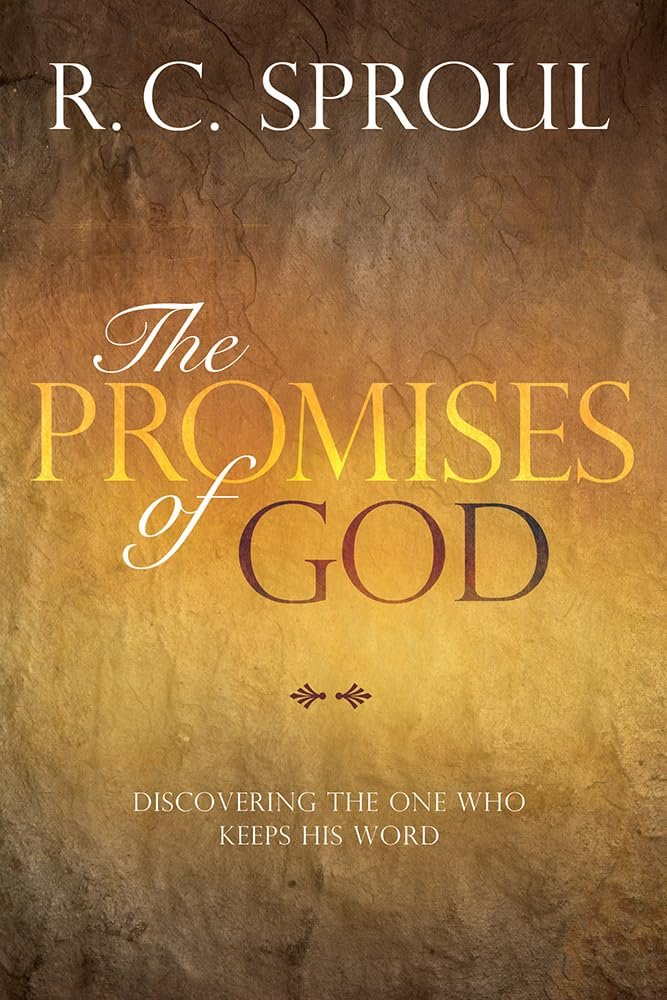

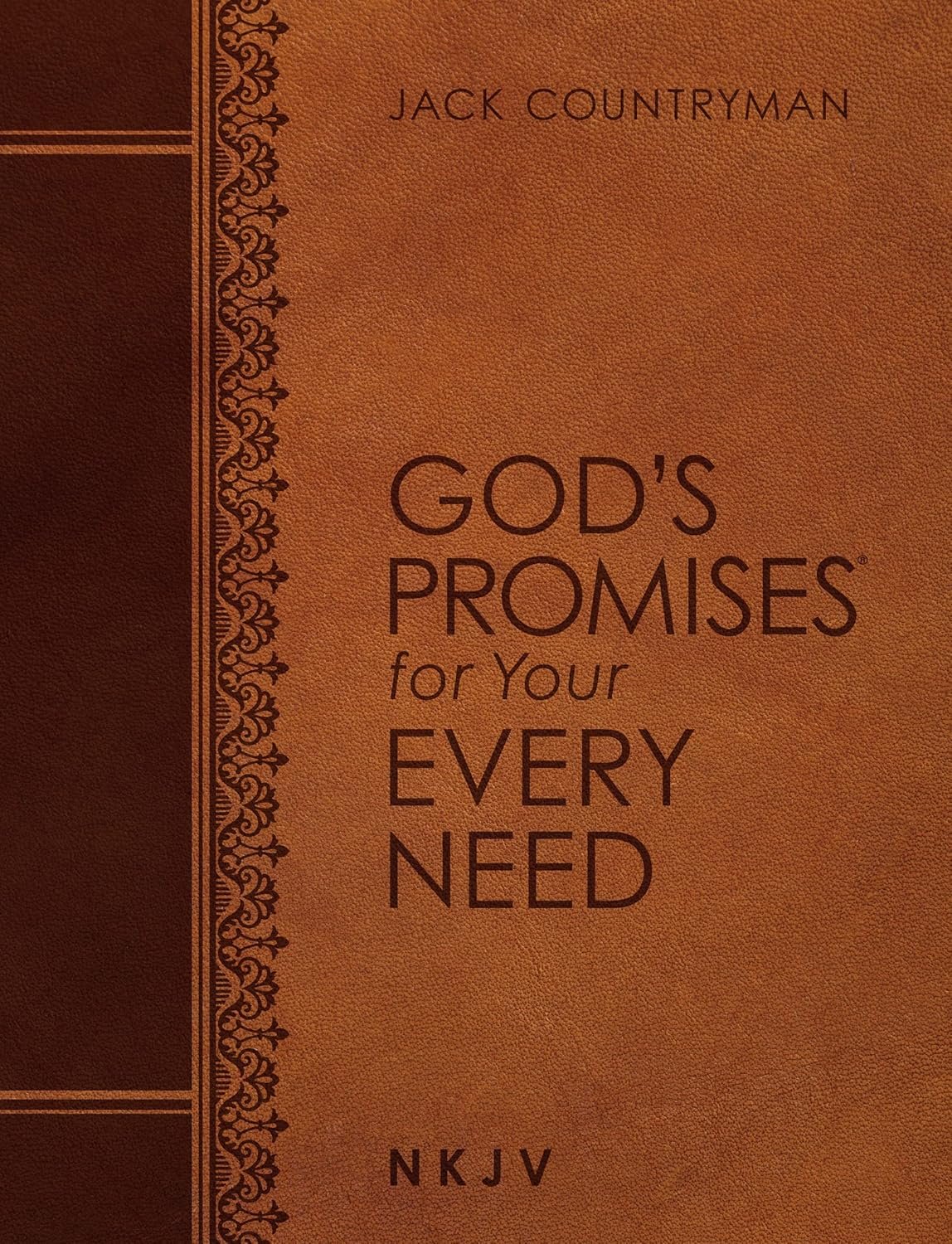

As an Amazon Associate, I earn from qualifying purchases. This page contains affiliate links. If you choose to make a purchase after clicking a link, I may receive a commission at no extra cost to you.If you need more information on God’s Plan of Salvation - Click Here
Want to help support this blog!
Order you favorite “Holy Spirit” Gear Below