The 12 Gates of Jerusalem: What They Teach Us About Restoration, Redemption, and the New Jerusalem
Join Our Skool Community- >>> HERE <<< - New 7-Day Study Course Added Weekly
There is something deeply fascinating about gates in the Bible.
At first glance, a gate may seem like a simple part of an ancient city wall — a practical opening where people came and went. But in Scripture, gates often carried much more meaning than that. Gates were places of access, authority, protection, judgment, commerce, worship, and sometimes even spiritual vulnerability.
A city’s gates said a lot about the condition of the city.
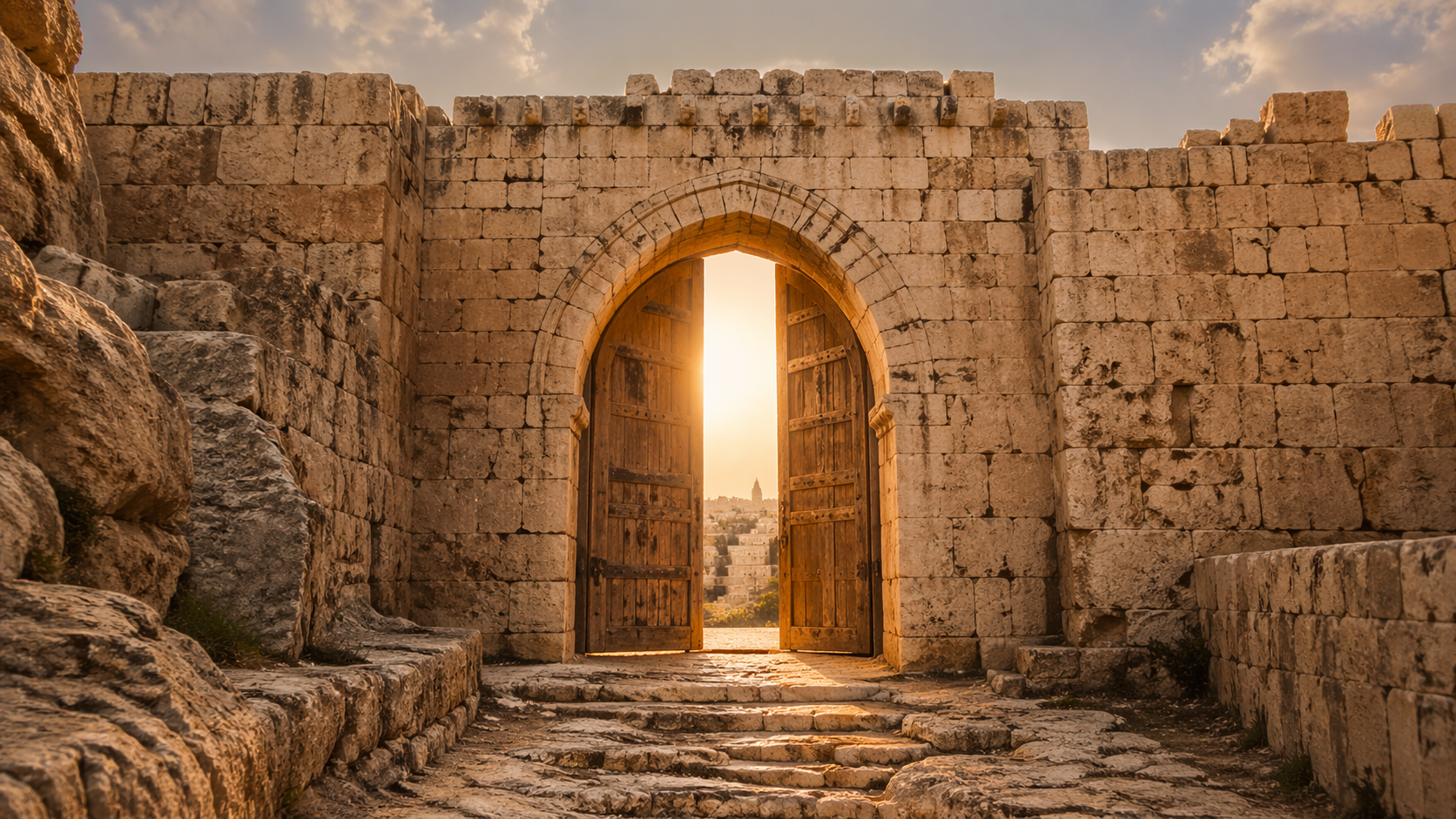
If the gates were strong, guarded, and functioning, the city was protected. But if the gates were burned, broken, or left open, the city was exposed to danger. That is why the gates of Jerusalem matter so much in the Bible. They are not merely historical details. They tell a deeper story about the condition of God’s people, the need for restoration, and the future hope of redemption.
When Nehemiah heard about Jerusalem, the report was heartbreaking:
“The remnant that are left of the captivity there in the province are in great affliction and reproach: the wall of Jerusalem also is broken down, and the gates thereof are burned with fire.” — Nehemiah 1:3
That one sentence tells us so much. Jerusalem was not only physically damaged; it was a visible picture of shame, exposure, and spiritual brokenness. The walls were down. The gates were burned. The city of God’s people looked defeated.
But God was not finished.
Through Nehemiah, God began a work of rebuilding. And tucked inside that rebuilding project is a beautiful spiritual picture for us today. The gates of Jerusalem remind us that God restores broken places, rebuilds ruined lives, and prepares His people for something far greater than earthly security.
The story begins with burned gates.
But the Bible ends with gates of pearl.
“And the twelve gates were twelve pearls; every several gate was of one pearl…” — Revelation 21:21
That is the beauty of redemption. What sin ruins, God restores. What is burned in Nehemiah becomes glorious in Revelation. What is broken on earth is made complete in eternity.
Why Were Gates So Important in the Bible?
In ancient times, a city gate was not just a doorway. It was one of the most important places in the city.
Business was conducted at the gate. Legal matters were settled at the gate. Elders sat at the gate. Kings gave judgments at the gate. Travelers entered through the gate. Enemies attacked the gate. Watchmen guarded the gate.
So when the Bible mentions gates, we should pay attention.
A gate determined what came into the city and what stayed out. Spiritually, that is a powerful picture. Our hearts have gates. Our homes have gates. Our minds have gates. Our churches have gates. What we allow in matters.
Proverbs says:
“Keep thy heart with all diligence; for out of it are the issues of life.” — Proverbs 4:23
The gates of Jerusalem can teach us about guarding our lives, restoring what has been damaged, and allowing God to rebuild the places where we have become vulnerable.
The Gates of Jerusalem in Nehemiah
One of the clearest lists of Jerusalem’s gates is found in Nehemiah 3. This chapter may look at first like a construction record — and yes, it is that — but it is also much more. It shows people working side by side to rebuild what had been broken.
Priests, rulers, families, goldsmiths, merchants, and ordinary people all took part. Everyone had a section of the wall. Everyone had a place in the work.
That alone is a lesson.
God’s restoration work is rarely done through one person only. He uses many hands, many gifts, and many willing hearts.
“So built we the wall; and all the wall was joined together unto the half thereof: for the people had a mind to work.” — Nehemiah 4:6
There are several gates mentioned in Nehemiah, and many Bible teachers study them as a spiritual progression. While we do not want to force meanings onto the text that are not there, the names and uses of these gates do give us rich pictures to reflect on.
Let’s look at them from a high-level view.
1. The Sheep Gate: Where Restoration Begins
The Sheep Gate is the first gate mentioned in Nehemiah 3.
“Then Eliashib the high priest rose up with his brethren the priests, and they builded the sheep gate…” — Nehemiah 3:1
This gate was likely connected to the bringing in of sheep for sacrifice. That immediately points our hearts to Jesus, the Lamb of God.
John the Baptist said:
“Behold the Lamb of God, which taketh away the sin of the world.” — John 1:29
What a powerful place to begin.
If we are looking at the gates as a picture of spiritual restoration, the Sheep Gate reminds us that everything begins with sacrifice. Our salvation does not begin with self-improvement. It does not begin with trying harder. It does not begin with cleaning ourselves up enough to come to God.
It begins with Jesus.
The Lamb was slain so sinners could be forgiven. The Shepherd gave His life for the sheep.
Jesus said:
“I am the good shepherd: the good shepherd giveth his life for the sheep.” — John 10:11
The Sheep Gate reminds us that restoration starts at the cross.
2. The Fish Gate: The Call to Reach Others
The Fish Gate is mentioned next.
“But the fish gate did the sons of Hassenaah build…” — Nehemiah 3:3
This gate may have been where fish merchants entered the city with their goods. Spiritually, it reminds many believers of Jesus calling His disciples to become fishers of men.
“And he saith unto them, Follow me, and I will make you fishers of men.” — Matthew 4:19
Once we have come to Christ, we are not meant to keep the good news to ourselves. The Fish Gate reminds us that restored people become witnesses.
God does not simply save us from something; He saves us for something.
We are called to carry the message of the gospel into a world that is hungry, weary, confused, and searching. Not everyone is called to preach from a pulpit, but every believer is called to reflect Christ.
The Fish Gate asks us a gentle but important question:
Who am I helping find the way to Jesus?
3. The Old Gate: Returning to God’s Ancient Truth
The Old Gate is also mentioned in Nehemiah 3.
“Moreover the old gate repaired Jehoiada the son of Paseah…” — Nehemiah 3:6
This gate reminds me of the “old paths” spoken of in Jeremiah.
“Thus saith the LORD, Stand ye in the ways, and see, and ask for the old paths, where is the good way, and walk therein…” — Jeremiah 6:16
We live in a world that constantly chases what is new. New opinions. New trends. New definitions. New ways of explaining away sin. New ways of trying to find peace apart from God.
But God’s truth does not expire.
The Old Gate reminds us that restoration often requires returning to what God has already said. Sometimes the problem is not that we need something new. Sometimes the problem is that we have drifted from what was true all along.
God’s Word is not outdated. It is eternal.
“For ever, O LORD, thy word is settled in heaven.” — Psalm 119:89
The Old Gate teaches us to value the ancient truth of God in a constantly shifting world.
4. The Valley Gate: Learning Humility in Low Places
The Valley Gate appears in Nehemiah 2 and Nehemiah 3.
“And the valley gate repaired Hanun…” — Nehemiah 3:13
Valleys in Scripture often represent difficult seasons, low places, trials, and humility. We all love mountaintop moments, but much of our spiritual growth happens in the valley.
David wrote:
“Yea, though I walk through the valley of the shadow of death, I will fear no evil: for thou art with me…” — Psalm 23:4
Notice David did not say he would avoid the valley. He said he would not walk through it alone.
The Valley Gate reminds us that God uses low places to shape us. He teaches us dependence there. He strips away pride there. He reminds us that we are not strong enough to be our own savior.
And honestly, some of the most beautiful restoration happens in the places we would never have chosen.
The valley is not proof that God has left us.
Sometimes the valley is where we learn to hear His voice more clearly.
5. The Dung Gate: Removing What Does Not Belong
This may not be the most glamorous gate, but it is one of the most necessary.
“But the dung gate repaired Malchiah the son of Rechab…” — Nehemiah 3:14
The Dung Gate was associated with removing waste from the city. Spiritually, it gives us a very practical picture: some things need to be carried out.
Sin needs to be confessed. Bitterness needs to be surrendered. Pride needs to be humbled. False beliefs need to be corrected. Unhealthy habits need to be removed. Spiritual clutter needs to go.
Paul wrote:
“Let us cleanse ourselves from all filthiness of the flesh and spirit, perfecting holiness in the fear of God.” — 2 Corinthians 7:1
Restoration is not only about what God builds. It is also about what God removes.
And this is where many of us resist Him.
We want the Fountain Gate’s refreshing before we pass through the Dung Gate’s cleansing. We want peace without repentance. We want renewal without surrender. But God loves us too much to leave the waste inside the walls.
The Dung Gate reminds us that cleansing is part of restoration.
6. The Fountain Gate: The Refreshing of Living Water
After the Dung Gate comes the Fountain Gate.
“But the gate of the fountain repaired Shallun the son of Colhozeh…” — Nehemiah 3:15
What a beautiful picture. After cleansing comes refreshing.
Water in Scripture often points to life, cleansing, and the work of the Holy Spirit. Jesus said:
“He that believeth on me, as the scripture hath said, out of his belly shall flow rivers of living water.” — John 7:38
The Fountain Gate reminds us that God does not only empty us of what is harmful. He fills us with what is life-giving.
He refreshes weary souls. He revives dry hearts. He gives living water to those who have tried to satisfy their thirst in all the wrong places.
Jesus told the woman at the well:
“Whosoever drinketh of the water that I shall give him shall never thirst…” — John 4:14
The Fountain Gate teaches us that true refreshment is found in Christ.
7. The Water Gate: Washed by the Word
The Water Gate is especially meaningful because in Nehemiah 8, the people gathered near it to hear the Word of God read aloud.
“And all the people gathered themselves together as one man into the street that was before the water gate…” — Nehemiah 8:1
Ezra opened the book of the law, and the people listened. They stood. They wept. They worshiped. They understood that God’s Word was not just information; it was life.
“So they read in the book in the law of God distinctly, and gave the sense, and caused them to understand the reading.” — Nehemiah 8:8
This is such an important lesson for us today.
We cannot be spiritually restored apart from the Word of God. Encouragement is wonderful. Worship music can be beautiful. Fellowship is needed. But nothing replaces Scripture.
Paul wrote that Christ sanctifies and cleanses His church:
“That he might sanctify and cleanse it with the washing of water by the word.” — Ephesians 5:26
The Water Gate reminds us that God’s Word washes us, teaches us, corrects us, and brings us back into alignment with Him.
8. The Horse Gate: Prepared for Spiritual Battle
The Horse Gate is mentioned in Nehemiah 3:28.
“From above the horse gate repaired the priests, every one over against his house.” — Nehemiah 3:28
Horses in Scripture are often associated with battle, strength, and warfare. This gate reminds us that the restored life is not free from spiritual conflict.
We have an enemy. We face temptation. We encounter discouragement. We wrestle against lies, fear, pride, distraction, and spiritual opposition.
Paul wrote:
“Put on the whole armour of God, that ye may be able to stand against the wiles of the devil.” — Ephesians 6:11
The Horse Gate reminds us that believers must be spiritually awake and prepared. We are not fighting for victory in our own strength. We stand in the victory of Christ. But we are still called to stand.
Not every struggle is a sign that something is wrong.
Sometimes the battle intensifies because restoration is happening.
9. The East Gate: Watching for the Glory of the Lord
The East Gate carries powerful prophetic meaning.
“After them repaired Zadok the son of Immer over against his house. After him repaired also Shemaiah the son of Shechaniah, the keeper of the east gate.” — Nehemiah 3:29
In Ezekiel’s vision, the glory of the Lord comes from the east.
“And the glory of the LORD came into the house by the way of the gate whose prospect is toward the east.” — Ezekiel 43:4
The East Gate reminds us of expectation, glory, and the hope of God’s promises being fulfilled.
As believers, we are not called to live with our eyes fixed only on the brokenness around us. We live looking forward. We live as people waiting for our King.
Titus says:
“Looking for that blessed hope, and the glorious appearing of the great God and our Saviour Jesus Christ.” — Titus 2:13
The East Gate reminds us to stay watchful.
Jesus came once as the Lamb.
He is coming again as King.
10. The Inspection Gate: Living Ready Before God
The Inspection Gate, also called the Miphkad Gate, is mentioned near the end of Nehemiah 3.
“After him repaired Malchiah the goldsmith’s son unto the place of the Nethinims, and of the merchants, over against the gate Miphkad…” — Nehemiah 3:31
The word “Miphkad” is often connected with numbering, appointment, mustering, or inspection. Spiritually, this reminds us that our lives are lived before God.
For the believer, this is not about fear of condemnation. Jesus has fully paid for our salvation. But Scripture does teach that our works, motives, and faithfulness matter.
“For we must all appear before the judgment seat of Christ…” — 2 Corinthians 5:10
The Inspection Gate reminds us to live intentionally.
What are we building?
What are we neglecting?
What are we doing with what God has entrusted to us?
One day, every hidden thing will be seen clearly. That should not terrify the believer, but it should sober us.
A restored life is a ready life.
11. The Gate of Ephraim: A Picture of Fruitfulness
The Gate of Ephraim is mentioned in Nehemiah 8:16 and Nehemiah 12:39.
Ephraim’s name is connected with fruitfulness. That makes this gate a beautiful reminder of the life God desires to produce in His people.
Jesus said:
“I am the vine, ye are the branches: He that abideth in me, and I in him, the same bringeth forth much fruit…” — John 15:5
God does not restore us merely so we can look repaired from the outside. He restores us so we can bear fruit.
Fruit of repentance.
Fruit of obedience.
Fruit of love.
Fruit of the Spirit.
Fruit that blesses others and glorifies God.
The Gate of Ephraim reminds us that a life connected to Christ should become a fruitful life.
12. The Prison Gate: Freedom for the Captive
The Prison Gate is mentioned in Nehemiah 12:39.
At first, that may sound like a strange gate to include in a spiritual reflection. But when we look through the lens of Scripture, it becomes a powerful reminder of deliverance.
Isaiah prophesied:
“The Spirit of the Lord GOD is upon me; because the LORD hath anointed me to preach good tidings unto the meek… to proclaim liberty to the captives, and the opening of the prison to them that are bound.” — Isaiah 61:1
Jesus later read from Isaiah and connected this passage to His own ministry.
“The Spirit of the Lord is upon me, because he hath anointed me to preach the gospel to the poor… to preach deliverance to the captives…” — Luke 4:18
The Prison Gate reminds us that Jesus came to set captives free.
Some people are imprisoned by sin. Some by shame. Some by fear. Some by bitterness. Some by grief. Some by lies they have believed for years.
But Christ is still the Deliverer.
The Prison Gate reminds us that no bondage is too strong for Him.
From Burned Gates to Pearl Gates
One of the most beautiful parts of this study is seeing how the Bible moves from broken gates to eternal gates.
In Nehemiah, Jerusalem’s gates had been burned.
In Revelation, the New Jerusalem has twelve gates made of pearl.
“And had a wall great and high, and had twelve gates, and at the gates twelve angels, and names written thereon, which are the names of the twelve tribes of the children of Israel.” — Revelation 21:12
And then:
“And the twelve gates were twelve pearls; every several gate was of one pearl…” — Revelation 21:21
That is stunning.
The story of Scripture is not merely about God fixing a damaged city. It is about God redeeming a fallen creation. The gates of Nehemiah show restoration after judgment. The gates of Revelation show glory after redemption.
In Nehemiah, the people rebuild.
In Revelation, God dwells with His people forever.
“And I heard a great voice out of heaven saying, Behold, the tabernacle of God is with men, and he will dwell with them…” — Revelation 21:3
The gates are no longer burned. They are no longer vulnerable. They no longer need repair.
They are gates of pearl in a city where God’s presence is the light.
What Do the Gates of Jerusalem Teach Us Today?
The gates of Jerusalem are rich with meaning, but here are a few high-level lessons we can carry into our own lives.
First, God cares about broken places. He did not ignore Jerusalem’s ruins. He raised up Nehemiah to rebuild. In the same way, God sees the broken places in our lives.
Second, restoration requires surrender. Some gates remind us of sacrifice, some of cleansing, some of humility, and some of spiritual warfare. God’s rebuilding work is beautiful, but it is also thorough.
Third, we must guard what enters our lives. Gates control access. Not everything should be allowed into our hearts, minds, homes, or churches.
Fourth, God’s Word is central to restoration. At the Water Gate, the people heard the Word and responded. If we want true renewal, we must return to Scripture.
Fifth, the end of the story is glory. Nehemiah’s gates point us forward to Revelation’s gates. God’s plan does not end with patched walls. It ends with a redeemed people in the presence of God.
A Personal Reflection
When I read about the gates of Jerusalem, I cannot help but think about the gates in my own life.
Are there places where I have become spiritually unguarded?
Are there areas where God is asking me to rebuild?
Are there things that need to be carried out through the Dung Gate?
Do I need to return to the Word at the Water Gate?
Am I looking with hope toward the East Gate, remembering that Jesus is coming again?
The gates of Jerusalem invite us to examine our lives honestly, but not hopelessly. God does not expose brokenness to shame us. He reveals it so He can restore it.
That is the heart of this study.
The gates are not just about ancient stones.
They are about redemption.
They show us a God who rebuilds what is ruined, cleanses what is defiled, strengthens what is weak, and opens the way into His presence through Jesus Christ.
Final Thoughts: The God Who Rebuilds Gates
The gates of Jerusalem tell a story that stretches from Nehemiah to Revelation.
They remind us that sin brings ruin, but God brings restoration. They remind us that God’s people are called to rebuild, guard, cleanse, worship, witness, fight, watch, and bear fruit. And most importantly, they point us to Jesus — the Lamb, the Shepherd, the Living Water, the Word made flesh, the coming King, and the only way into the eternal city.
Jesus said:
“I am the door: by me if any man enter in, he shall be saved…” — John 10:9
That may be the most important gate lesson of all.
Every gate points us to the truth that we cannot enter God’s presence by our own goodness, effort, or religious performance. We enter through Christ.
The Bible begins with humanity being driven out of Eden, away from the tree of life. But it ends with the redeemed entering the New Jerusalem, where the gates are never shut and God dwells with His people forever.
“And the gates of it shall not be shut at all by day: for there shall be no night there.” — Revelation 21:25
From burned gates to pearl gates.
From ruin to restoration.
From exile to eternal home.
That is the story of redemption — and it is all made possible through Jesus.
👉 Join the 7-Day Course on Skool
Recommended Books to Further Study the Subject
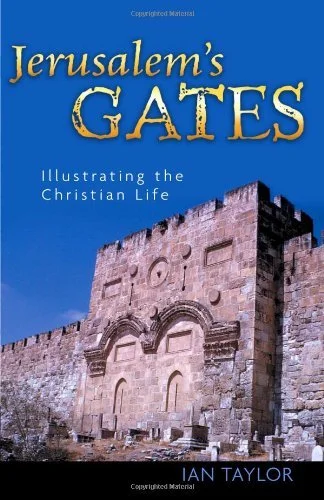
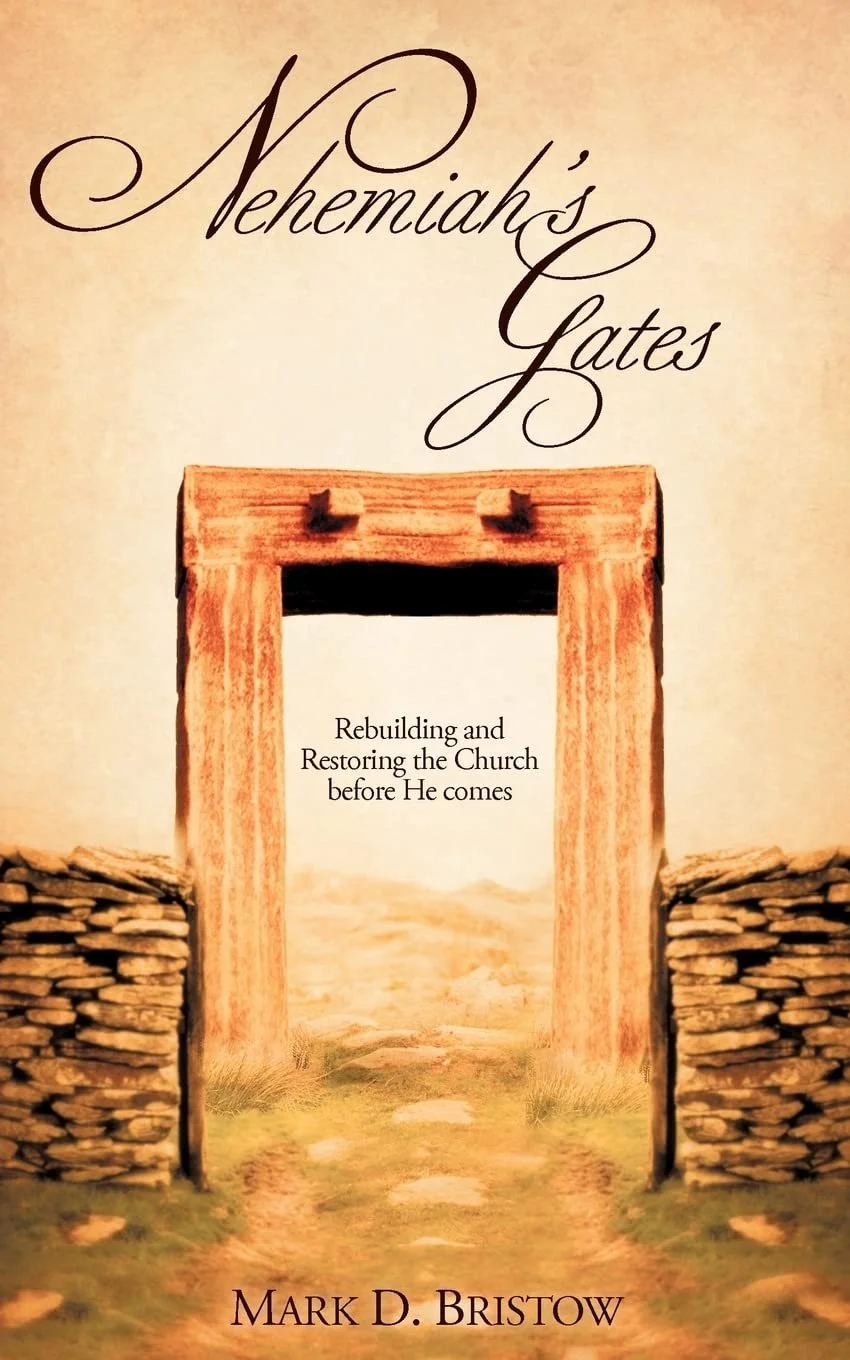
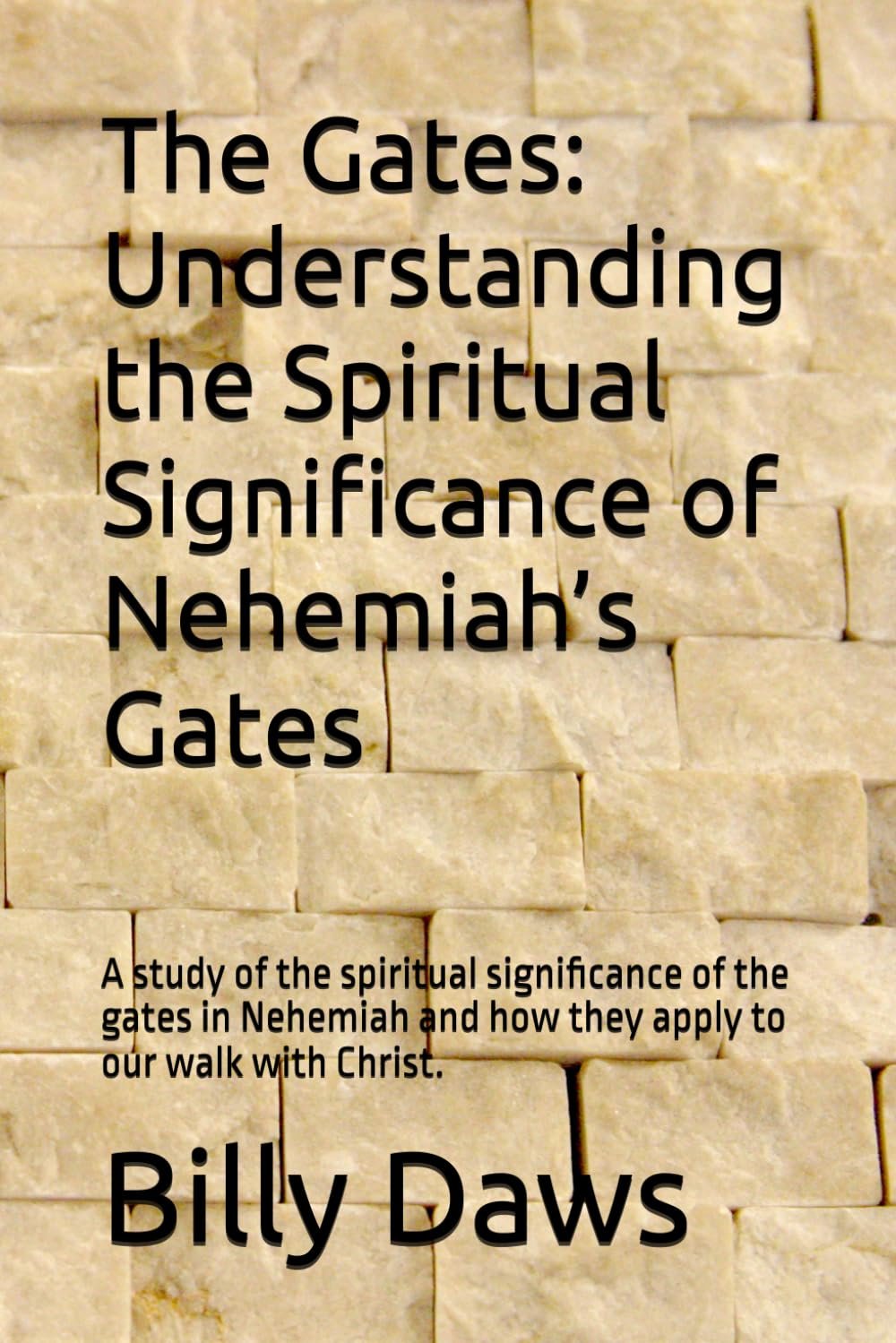
As an Amazon Associate, I earn from qualifying purchases. This page contains affiliate links. If you choose to make a purchase after clicking a link, I may receive a commission at no extra cost to you.If you need more information on God’s Plan of Salvation - Click Here
Want to help support this blog!
Order you favorite “Holy Spirit” Gear Below